

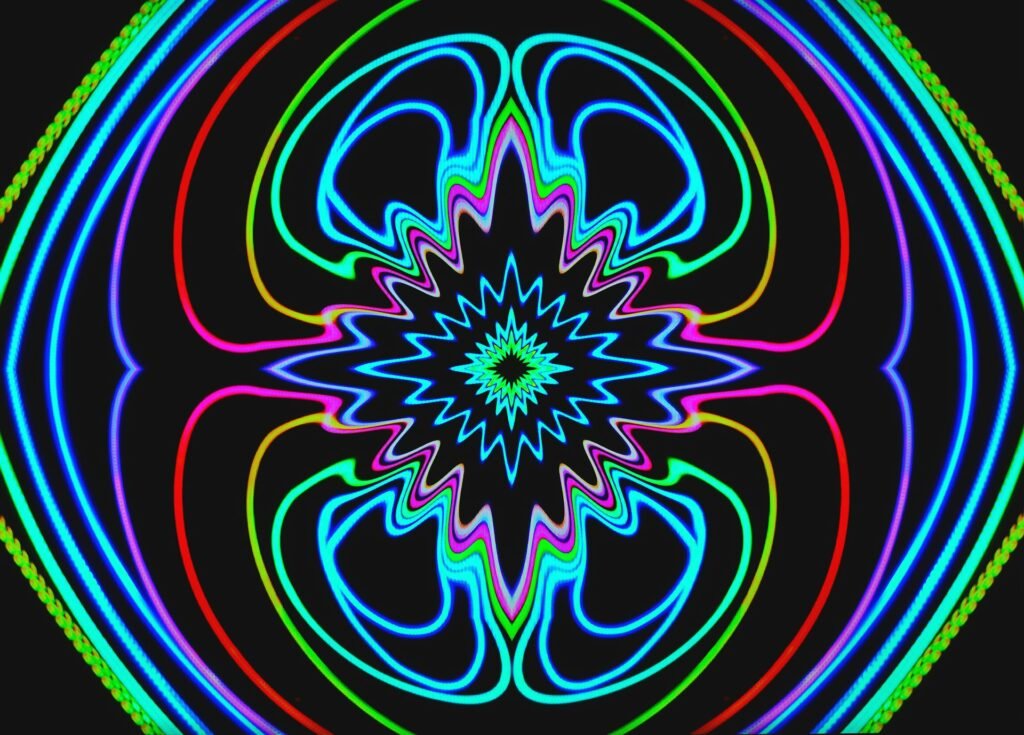
Neon colors have made a powerful return in modern branding and design; they now carry bold intent. These high-voltage hues instantly attract attention in an ever-crowded visual landscape, signalling energy, innovation, and confidence. From dynamic logos and packaging to immersive digital experiences, neon shades help brands stand out and connect emotionally with audiences. But the magic isn’t just about being bright – it’s about aligning this brightness with brand purpose. In this article, we’ll explore why neon colors work in design and branding, unpack the psychological drivers behind their appeal, reveal best practices for using them effectively, and highlight common pitfalls to avoid.
1. Why neon colors stand out
Neon colors capture attention because of their unique optical properties: they bounce more light, appear more vivid, and often seem to “glow.”In branding, that means neon elements can literally pop off screens or print, making a logo or packaging hard to ignore. Research shows that intense color usage can boost visibility – brands that embrace neon often break through faster in saturated markets.
The contrast that neon creates, especially when paired with dark or muted backgrounds, enhances legibility and memorability.
2. The psychological pull of neon for brand emotion
Colors carry deep emotional and psychological meaning – neon takes that meaning and intensifies it.
For example:
- Neon green suggests innovation, growth, and forward-thinking (used by tech or gaming brands)
- Neon pink or magenta implies youth, creativity, and fashion-forward appeal
- Neon yellow and orange evoke urgency, energy, and visibility (excellent for promotions)
When a brand intentionally chooses a neon hue, it’s doing more than picking a color – it’s embedding mood, personality, and positioning. That said, overuse of neon can backfire by creating sensory overload and diluting the message.
3. Where neon works in branding & design
Not all brands should use neon in the same way – but when used appropriately, neon shines:
- Emerging, disruptive, or digital-first brands: If your brand wants to signal “modern”, “edgy”, or “ahead of the curve”, neon can reinforce that alignment.
- Youth- and pop-culture-oriented brands: Brands targeting younger demographics, music, gaming, or fashion markets find neon an ideal fit.
- Digital and web experiences: On screens, neon has extra power thanks to RGB brightness. Neon elements used as buttons, highlights, or key graphics draw the eye in digital formats.
- Accent usage for impact: Even for brands not built on neon, using a neon hue as an accent – the call-to-action color, packaging highlight, or signage detail – can deliver high value without overwhelming the brand.
4. Best practices for using neon colors effectively
To get the benefits of neon without compromising brand legibility or tone, follow these guidelines:
- Use neon sparingly: Treat neon as a highlighter, not the entire palette. Too many neon elements dilute their impact.
- Pair with neutral or dark backgrounds: Neon works best when there’s high contrast – for example, neon against black, charcoal, or muted tones.
- Align with brand personality: If your brand tone is serious, professional, or heritage-oriented, neon may clash unless handled with subtlety.
- Test across media: Neon may look great on screen, but behaves differently in print or under different light conditions. Ensure consistency and test for accessibility.
- Maintain consistency: Choose one or two neon hues and keep their usage consistent across identity touch-points – logo, packaging, etc.
5. Pitfalls and how to avoid them
Even with the best intentions, misuse of neon can lead to issues:
- Trend risk / limited longevity: Neon hues can feel tied to a specific era or trend and may age faster than classic palettes.
- Sensory overload: When everything is neon, nothing stands out. The viewer gets tired or distracted instead of engaged.
- Readability problems: Poor contrast or poor medium adaptation (print vs digital) can make neon elements difficult to read.
- Audience mismatch: Neon might alienate more conservative or premium-oriented audiences if it’s not brand-aligned.
- Avoiding these pitfalls means being strategic: neon isn’t a substitute for brand strategy – it must serve it.
Conclusion
In an era of endless visual stimuli, neon colors provide an electrifying way for brands to stand out, evoke emotion, and project energy. But their power comes with responsibility: when aligned to brand personality, used in contrast, and applied with restraint, neon becomes a signature asset – not just another bright color. For brands that are modern, youthful, and bold, neon can be the spark that ignites recognition and engagement. For others, even a subtle neon accent might be the perfect touch. Ultimately, the question is not whether you can use neon – it’s whether you should, and how you’ll use it to tell your brand’s story.