

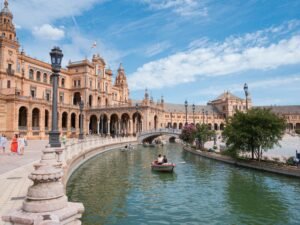
While Barcelona undoubtedly ranks among Europe’s most celebrated destinations, Spain’s cultural tapestry extends far beyond the Catalan capital. The country boasts a remarkable collection of cities that showcase diverse architectural styles, rich historical narratives, and vibrant local traditions. As travelers plan their journeys for 2026, exploring these lesser-known yet equally captivating Spanish cities offers an opportunity to experience authentic Spain away from crowded tourist routes.
1. Seville: The Soul of Andalusia
Seville, the capital of Andalusia, captures the true charm and romance of southern Spain. This historic city attracts visitors with its beautiful architecture, vibrant flamenco culture, and scenic views along the Guadalquivir River. The impressive Seville Cathedral, one of the largest Gothic churches in the world, highlights the city’s rich architectural heritage.
A visit to the stunning Alcázar Palace is a must, known for its detailed Mudejar designs and peaceful gardens that feel like stepping into another era. The Santa Cruz neighborhood is perfect for a relaxed walk, with its narrow cobblestone streets, whitewashed houses, and hidden squares filled with local tapas bars. To fully experience Seville’s culture, don’t miss a live flamenco performance. The music, dance, and emotion beautifully reflect the spirit of Andalusia.
2. Valencia: Where Science Meets Mediterranean Beauty
Valencia offers a perfect mix of modern design and coastal charm. One of its top attractions is the City of Arts and Sciences, a stunning futuristic complex designed by Santiago Calatrava. With its unique architecture, it feels like something out of the future. Inside, you’ll find world-class museums, a large aquarium, and an IMAX cinema all worth exploring.
Beyond its modern side, Valencia is rich in history and tradition. The old town is home to a beautiful cathedral and charming medieval streets that tell the story of the city’s past. Just a short distance away, the beaches offer a great place to relax or enjoy water activities after a day of sightseeing. If you visit in March, don’t miss the famous Las Fallas festival. This lively event features giant sculptures, colorful parades, and spectacular fireworks that light up the city for several nights.
3. Granada: Moorish Splendor in the Sierra Nevada
Granada stands as a gateway to Spain’s Moorish past, nestled beneath the snow-capped peaks of the Sierra Nevada mountains. The Alhambra, a UNESCO World Heritage site and one of Spain’s most iconic monuments, showcases Islamic architecture of breathtaking sophistication. This 14th-century palace complex features intricate tile work, geometric patterns, and serene courtyards that reflect centuries of artistic refinement.
The adjacent Generalife gardens provide tranquil spaces adorned with fountains, terraces, and vegetation that enhance the palace’s romantic ambiance. The Albaicín neighborhood, Granada’s historic Moorish quarter, invites wanderers through its labyrinthine streets, traditional tea houses, and artisan shops. Evening viewpoints offer spectacular vistas of the illuminated Alhambra set against mountain backdrops, creating an unforgettable visual experience. The city’s vibrant tapas culture and welcoming atmosphere make Granada an essential destination for those seeking cultural depth and natural beauty.
4. Bilbao: Industrial Transformation and Basque Culture
Bilbao has undergone a remarkable renaissance, transforming from an industrial hub into a contemporary cultural powerhouse. The Guggenheim Museum Bilbao, with its distinctive titanium-clad exterior designed by Frank Gehry, serves as a symbol of the city’s reinvention and has become an architectural icon of the 21st century. The museum’s world-class art collections and innovative exhibitions attract visitors from across the globe.
Beyond contemporary art, Bilbao celebrates its rich Basque heritage through distinctive cuisine, local traditions, and authentic cultural experiences. The Old Town preserves medieval charm with its Gothic cathedral and traditional pintxos bars, where visitors can sample innovative small bites paired with local ciders and wines. The Nervión River, once central to industrial operations, now features revitalized waterfront areas perfect for strolling and dining. The surrounding Basque Country offers additional cultural exploration, with traditional villages, museums dedicated to Basque identity, and access to both mountain and coastal landscapes.
5. Córdoba: The City of Caliphates
Córdoba is one of Spain’s most historic cities, once serving as the capital of the powerful Córdoba Caliphate during the medieval Islamic period. Its most famous landmark, the Mezquita (Great Mosque-Cathedral), is a stunning example of mixed Islamic and Christian architecture. The iconic red and white arches create a striking visual effect, while the cathedral inside reflects centuries of religious change.
The Jewish Quarter is another highlight, with its narrow streets, whitewashed houses, and colorful flower pots creating a charming atmosphere. Here, you can also visit historic synagogues. The Alcázar fortress offers beautiful views of the city and a glimpse into its medieval past. Don’t miss the Roman Bridge, a historic structure that’s still in use today and perfect for a scenic walk. With its quiet plazas, flower-filled courtyards, and delicious local cuisine, Córdoba offers an authentic Andalusian experience away from the crowds.
Planning Your Spanish Journey in 2026
Each of these five Spanish cities offers something unique for travelers looking to explore beyond Barcelona. Seville is perfect for cultural experiences and vibrant traditions, while Valencia blends modern attractions with coastal charm. Granada stands out for its rich Islamic heritage and scenic mountain views, Bilbao showcases modern transformation alongside Basque culture, and Córdoba offers deep history with a touch of medieval charm.
When planning your trip to Spain in 2026, consider visiting more than one city to enjoy a well-rounded cultural experience. Spring and fall are the best times to visit, with pleasant weather and fewer crowds compared to the busy summer months. Together, these cities highlight Spain’s incredible diversity and promise unforgettable travel experiences for every type of traveler.
Photo by Robson Felicio on Unsplash